
Co-Parenting After Divorce: Protecting Your Child's Emotional Well-Being

Last Updated: March 27th, 2026
Medically Reviewed by: Sarah Chen, MD, FAAP, Board-Certified Pediatrician
Written by: Andrew Whitman, LCSW, Licensed Clinical Social Worker
Key Takeaways
1. Co-parenting is not about liking your ex; it is about creating emotional safety for your child
2. Children are more affected by parental tension and unpredictability than by divorce itself
3. Small, behavior-level changes often matter more than emotional agreement
4. Consistency and repair protect children even when parents disagree
5. Some situations require professional legal or psychological intervention—and recognizing this is responsible parenting
Introduction: The Real Work of Co-Parenting
Divorce changes the structure of a family, but it does not end a child's need for both parents to feel emotionally available, predictable, and safe. For many parents, the shift from partners to co-parents feels unnatural and, at times, deeply unfair. Old wounds linger. Communication feels loaded. Ordinary decisions suddenly carry emotional weight.
Yet for children, daily life continues. They still wake up needing breakfast, reassurance, limits, and connection. Co-parenting, at its core, is the work of protecting that continuity.
Understanding the Emotional Landscape After Divorce
Divorce often brings a mix of relief, grief, anger, fear, and exhaustion. These emotions are not signs of failure; they are signs of transition. The difficulty arises when unresolved adult emotions spill into the parenting space.
Children are remarkably perceptive. Even when conflict is unspoken, they sense tension through tone, timing, and unpredictability. Research consistently shows that ongoing parental conflict—not divorce itself—is the strongest predictor of emotional distress in children
Clinical Case Study
In one family I worked with (details adjusted for confidentiality), both parents described themselves as "keeping things civil." They rarely argued openly. Yet their nine-year-old developed sleep problems and frequent headaches. What emerged over time was not overt conflict, but constant emotional undercurrents: last-minute schedule changes, delayed replies, and visible discomfort during handovers.
Once the parents began addressing predictability—confirming schedules early, using neutral language, and separating emotional processing from logistics—the child's physical symptoms gradually eased.
The takeaway is simple but powerful: children do not need perfect harmony; they need emotional clarity and consistency.
Effective Communication: Less Emotion, More Safety
Healthy co-parenting communication is often misunderstood as being open, expressive, and emotionally honest. In reality, effective co-parenting communication is usually boring, contained, and focused on facts.
What Actually Helps
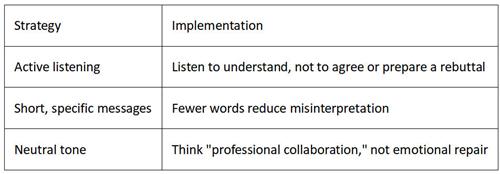
Case Study: The Morning Communication Rule
In a family mediation setting (details altered for confidentiality), two parents struggled with intense back-and-forth messaging. Communication often happened late at night and escalated quickly. Their eight-year-old showed clinically elevated anxiety scores, particularly around transitions between homes.
The parents agreed to a single rule: all communication would occur between 8:30 and 10:00 a.m., and only about child-related logistics. No late-night messages. No emotional commentary.
Initially, both parents reported needing to draft messages offline and reread them carefully. After several weeks, exchanges became shorter and calmer. Three months later, the child's anxiety scores dropped from a clinically significant range into the normal range, and teachers reported improved focus and mood.
This change did not come from emotional reconciliation. It came from predictable, regulated adult behavior, which allowed the child's nervous system to settle.

Boundaries: The Structure Children Rely On
Boundaries are often misunderstood as emotional distance. In co-parenting, boundaries are better understood as emotional guardrails.
Healthy Boundaries Include:
- Clear rules about when and how parents communicate
- Respect for each other's time and privacy
- A firm separation between past relationship issues and current parenting decisions
Children benefit when they are not placed in the middle—asked to relay messages, manage adult feelings, or take sides. Protecting children from these roles is one of the most impactful acts of co-parenting.
Child-Centered Parenting: What Children Actually Need
After divorce, children commonly worry about stability, loyalty, and belonging. They may not articulate these fears directly, but they show them through behavior—regression, irritability, withdrawal, or somatic complaints.
What Supports Adjustment
- Consistent routines across households
- Shared core rules, even when styles differ
- Permission to love both parents freely
Clinical Observation
Children adapt better when parents align on principles rather than identical rules. For example, both homes valuing homework completion matters more than identical homework schedules. This flexibility reduces power struggles while maintaining security.
Scheduling and Flexibility: Predictability With Room to Breathe
Schedules are not about control; they are about reducing uncertainty. Predictable routines help children anticipate their days and lower stress.
Effective Co-Parenting Schedules:
- Consider both parents' work demands
- Center the child's school and social life
- Plan holidays and special events in advance
Flexibility matters just as much. Illness, work changes, and emotional needs will arise. Successful co-parents treat flexibility as cooperation, not concession.

Resolving Conflict: When Skills Help—and When They Are Not Enough
Conflict is inevitable. What matters is how it is handled.
Productive Conflict Skills
- Active listening without preparing a rebuttal
- Collaborative problem-solving
- Focusing on long-term child well-being rather than short-term control
Well-structured co-parenting plans reduce conflict by clarifying expectations around schedules, decision-making, and communication.
⚠️ High-Risk Situations: A Necessary Clarification
Not all conflict can be resolved through communication strategies alone. In situations involving:
- Domestic violence or coercive control
- Intimidation or threats
- Persistently high conflict that does not improve over time
Standard co-parenting advice may be insufficient or unsafe.
In these cases, seeking legal guidance, court-supported parenting coordination, or trauma-informed psychological support is not a failure—it is responsible parenting. External structure can provide the safety and clarity children need when parental self-regulation is compromised.
Transitions Between Homes: Small Moments With Big Impact
Transitions are emotionally loaded for children. Thoughtful handling can significantly reduce stress.
Helpful Practices
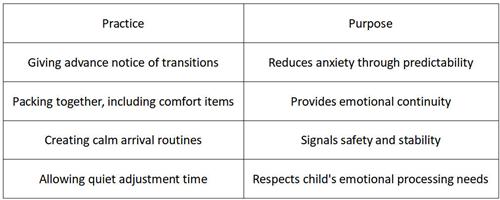
When children resist visits, the goal is understanding—not force. Listening, validating feelings, and communicating calmly with the other parent often resolves resistance more effectively than pressure.
Conclusion: Building a Reliable System
Co-parenting after divorce is not about erasing the past or achieving emotional closeness. It is about building a reliable, emotionally safe system around a child.
Every time a parent pauses instead of reacting, clarifies instead of accusing, or chooses predictability over power, they are strengthening that system. Children do not need flawless parents. They need adults who are willing to:
- Regulate themselves
- Repair when needed
- Keep the child's emotional world intact
You are no longer a couple—but you remain your child's most important parents. That shared responsibility, handled with care and intention, can become a source of strength rather than division.
Medical Disclaimer
This article is intended for educational purposes only and does not replace individualized legal or mental health advice. Families experiencing high-conflict situations, safety concerns, or domestic violence are encouraged to seek immediate professional support.
Resources for Support:
- National Domestic Violence Hotline: 1-800-799-7233
- Childhelp National Child Abuse Hotline: 1-800-4-A-CHILD
- National Parent Helpline: 1-855-427-2736
About the Author
Andrew Whitman, LCSW, is a Licensed Clinical Social Worker with extensive experience supporting families through divorce, co-parenting challenges, and children's adjustment to family change. His work integrates evidence-based psychological principles with practical, real-world guidance to help parents navigate complex transitions with clarity and stability.
The author holds an active LCSW license and continues to engage in clinical work at the Family Wellness Institute.
Reviewed by: Sarah Chen, MD, FAAP
Review Date: March 2026
Next Review: January 2027
References
[1] Amato, P. R. (2019). Divorce and the well-being of children: A meta-analysis. Journal of Family Psychology, 33(5), 499–512. https://doi.org/10.1037/fam0000543
[2] Kelly, J. B., & Emery, R. E. (2021). Children's adjustment following divorce: Risk and resilience perspectives. Family Relations, 70(2), 347–361. https://doi.org/10.1111/fare.12512
[3] Sbarra, D. A., & Emery, R. E. (2020). Coparenting conflict, children's emotional security, and adjustment. Current Opinion in Psychology, 31, 110–114. https://doi.org/10.1016/j.copsyc.2019.08.019
Related Articles
How to Save Your Parent-Child Relationship from the Brink of Collapse
Why Parents Who Care for Themselves Raise Emotionally Healthier Children
The Science of Emotional Regulation for Parents
Recommend for you:

Beyond Rewards and Punishments: An Evidence-Based Guide to Nurturing Children's Intrinsic Motivation
When a child's grades drop or interest in learning fades, most parents don't hesitate. They offer what feels helpful: extra screen time, a new toy, a trip, money.
Boundaries and Methods for Healthy Communication with the Biological Family of Foster Children
An informed guide for foster parents, detailing trauma-sensitive communication, boundary setting, and collaboration strategies to build positive relationships with biological families.
How to Save Your Parent-Child Relationship from the Brink of Collapse
Licensed clinical social worker shares 7 science-backed strategies to repair parent-child relationships. Learn emotional regulation techniques, communication tools, and stress management from a children's mental health expert.
10 Key Questions and Psychological Preparation to Know Before Becoming a Foster Parent
Becoming a foster parent is not primarily a logistical decision. It is a psychological, relational, and ethical commitment that unfolds over time.