
Healing Through Connection: A Guide to Supporting Foster Children's Emotional Needs

Medically reviewed by Dr. Sarah Chen, MD, Board-Certified Child & Adolescent Psychiatry | Last updated: March 27, 2026
Key Takeaways
1. Placement instability is a critical risk factor: A 2025 UK meta-analysis found that each additional placement change significantly increases the risk of mental health difficulties, self-harm, and psychiatric diagnoses among care-experienced children
2. Trauma-informed interventions are effective: A meta-analysis of 12 RCTs (N=1,316) found that trauma-informed parenting interventions significantly reduce trauma-related symptoms and improve foster parent-child relationships
3. Attachment security is modifiable: The Multidimensional Treatment Foster Care for Preschoolers (MTFC-P) program demonstrated that children with prior placement instability could develop increased secure attachment behaviors and decreased resistant/avoidant behaviors
4. Consistency predicts better outcomes: Children in stable placements showed gradual improvement in behavior, while those with unstable placements demonstrated more complex trajectories
5. Professional support is essential: Therapy and trauma-informed interventions provide critical scaffolding for children with deep-seated trauma and attachment disruptions
Introduction: Understanding the Weight of Trauma
Foster children arrive in their new homes carrying emotional wounds shaped by trauma, loss, and instability. These children may not always show their pain outwardly, but it is embedded in their behaviors, their reactions to new environments, and their expectations of relationships.
As foster parents, understanding these emotional needs and responding with patience, empathy, and trauma-informed care is not just compassionate—it is essential for healing.
This guide synthesizes the latest research on foster care trauma, attachment theory, and evidence-based interventions to provide practical, scientifically-grounded strategies for supporting foster children's emotional development.
The Impact of Trauma: What Research Reveals
The Prevalence of Trauma in Foster Care
Children enter foster care because their biological families can no longer provide safe environments. Whether due to neglect, abuse, or abandonment, these children have experienced adverse childhood experiences (ACEs) that fundamentally shape their neurobiological development and stress response systems.
Key research findings:
- Trauma exposure is nearly universal: Studies consistently show that children in foster care have experienced multiple forms of maltreatment, with complex trauma being the norm rather than the exception
- Developmental impact: Trauma disrupts attachment formation, emotional regulation, cognitive development, and stress physiology
- Long-term consequences: Without intervention, childhood trauma predicts increased risk of depression, PTSD, substance use disorders, and relationship difficulties in adulthood
Placement Instability: The Compounding Factor
A 2025 UK systematic review and meta-analysis—the first globally to examine this relationship—found that placement instability is significantly associated with poorer mental health outcomes among care-experienced children .
Critical statistics:
- In the UK, approximately 30% of children in care experience at least one placement change each year, with 10% facing two or more moves
- A 2019 meta-analytic review found that placement instability creates a cycle where trauma symptoms increase the risk of placement disruption, which in turn worsens mental health outcomes
- Children with unstable placements were more likely to be older at entry into care and have sexual abuse as a reason for removal (12.5% vs. 1% in stable placements)
The mechanism: Each placement disruption represents not just a change of address, but a loss of attachment figures, routines, and sense of belonging. For children already traumatized, this retraumatization can be profound.

Core Emotional Challenges: A Research-Based Framework
1. Attachment Disruptions: The Relational Wound
The science: Attachment theory, developed by John Bowlby and extended by Mary Ainsworth, posits that children need reliable, responsive caregivers to develop internal working models of relationships as safe and trustworthy. Trauma disrupts this process, leading to:
- Insecure attachment patterns: Avoidant, resistant, or disorganized attachment styles
- Difficulty with emotional co-regulation: Inability to use caregivers to soothe distress
- Hypervigilance: Constant scanning for threat or abandonment
Evidence-based intervention: The Multidimensional Treatment Foster Care for Preschoolers (MTFC-P) program demonstrated that even children with prior placement instability could develop increased secure attachment behaviors over time, showing decreased resistant and avoidant behaviors when foster parents received specialized training .
Case illustration (composite based on clinical observation):
Ethan, a young boy who had been moved between multiple foster homes, initially clung to his new caregiver for days, seeking constant attention. Then, suddenly, he would lash out in anger, rejecting affection. This "push-pull" behavior reflected his fear of attachment—past experiences had taught him that closeness was temporary and led to abandonment. Building trust required consistency, patience, and reassurance that this relationship would not disappear.
Practical strategy:
- Consistency over intensity: Regular, predictable presence matters more than grand gestures
- Repair after rupture: When misattunement occurs, prompt repair strengthens the attachment bond
- Patience with timeline: Secure attachment may take months or years to develop; pushing for quick results is counterproductive
2. Emotional Dysregulation: The Neurobiological Impact
The science: Children who have experienced neglect or abuse often exhibit emotional dysregulation—difficulty managing emotional responses to stress or triggers. This stems from:
- Dysregulated stress response systems: Chronic activation of the HPA axis and amygdala
- Limited emotional vocabulary: Lack of modeling for identifying and expressing feelings
- Sensory processing differences: Trauma can alter sensory integration, leading to over- or under-reactivity
Research finding: A 2020 follow-up study found that foster children are at significant risk for developing problems in social-emotional functioning by age 8, with early trauma exposure predicting later difficulties .
Case illustration (composite based on clinical observation):
Maria, a 6-year-old with a history of emotional outbursts, would cry, scream, or shut down over seemingly small problems—losing a toy or not getting her way. These reactions were not intentional misbehavior but reflected an emotional system out of balance. Through consistent routines, emotional coaching, and coping strategies like deep breathing, Maria gradually developed better emotional regulation.
Evidence-based strategies:
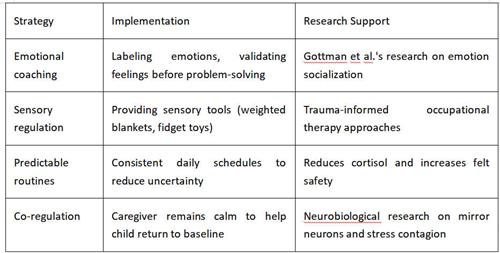
3. Fear of Abandonment: The Expectation of Loss
The psychology: Having been separated from biological families or moved between placements, foster children often develop attachment anxiety—a core belief that anyone who comes into their lives will eventually leave.
Behavioral manifestations:
- Hostility as protection: Pushing caregivers away before they can be abandoned
- Superficial compliance: Being "perfect" to avoid rejection
- Emotional withdrawal: Shutting down to protect against anticipated loss
Case illustration (composite based on clinical observation):
Lily, a teenager who had experienced multiple placement disruptions, showed intense fear of attachment. Every time she let her guard down, someone had left her. This fear manifested as hostility toward her foster family—pushing people away even when they showed kindness. It took months of consistent care, reassurance, and trauma-informed therapy for Lily to understand that this family was committed to her. Gradually, she began to open up emotionally and form a secure attachment.
Research insight: A 2021 study using model-based recursive partitioning found that caregiver-child attachment was a significant treatment moderator for reunification outcomes—stronger initial attachment predicted better intervention response . This underscores the critical importance of addressing attachment fears early.

4. Self-Blame and Cognitive Distortions: The Internalized Narrative
The psychology: Foster children often internalize trauma, developing negative core beliefs about themselves and their worth. Common cognitive distortions include:
- Personalization: "I am bad; that's why my family left me"
- Overgeneralization: "Nothing good will ever happen to me"
- Catastrophizing: "If I make a mistake, I'll be sent away"
Case illustration (composite based on clinical observation):
Mark, a 9-year-old, blamed himself for his family's dysfunction, frequently stating, "I'm bad, that's why my family left me." These thoughts are common among abused or neglected children who lack the cognitive tools to understand that maltreatment was not their fault. Through cognitive-behavioral techniques, consistent positive reinforcement, and reframing negative thoughts, Mark gradually rebuilt his self-esteem.
Evidence-based intervention: Trauma-Focused Cognitive Behavioral Therapy (TF-CBT) has strong empirical support for addressing trauma-related cognitive distortions in children . Foster parents can support this work by:
- Challenging negative self-talk: Gently questioning self-blaming statements
- Providing alternative narratives: Helping children understand developmentally appropriate explanations for their removal
- Building mastery experiences: Creating opportunities for success and competence
Coping Strategies: A Trauma-Informed Approach
1. Establish Consistency and Predictability
The research: Children who have experienced trauma feel most secure in environments where they can predict what will happen next. A consistent daily routine provides stability and helps children feel more in control .
Meta-analysis finding: A 2018 meta-analysis of 21 trauma-informed parenting interventions found that effective programs provided clear structure and predictable routines as core components .
Practical implementation:
- Visual schedules: Posted daily routines reduce anxiety about transitions
- Warning before changes: Advance notice helps children prepare emotionally
- Consistent responses: Similar behaviors receive similar consequences, building trust in caregiver reliability
Case example (composite based on clinical observation):
Emma, a young girl who had experienced multiple placements, struggled with separation anxiety. Establishing a regular bedtime routine, mealtime schedule, and after-school activities created a predictable environment. Over time, Emma's anxiety decreased as she learned that her basic needs would be consistently met.
2. Build Trust Through Empathy and Boundaries
The research: Effective foster parenting requires both warmth and structure—high responsiveness combined with clear expectations. A 2021 study found that trauma-informed parenting interventions were most effective when they included both emotional support and behavioral guidance .
The balance:
- Empathy: Acknowledging feelings before setting limits ("I see you're upset. It's okay to feel that way...")
- Boundaries: Clear, consistent limits provide safety ("...but we don't hit. Let's take a deep breath together.")
Why this works: Children who have experienced trauma may not have experienced healthy boundaries. Clear, consistent limits—delivered with empathy—provide the secure base from which children can explore and develop.

3. Encourage Emotional Expression Through Creative Outlets
The research: Many foster children have difficulty expressing emotions verbally, either because they were taught to suppress feelings or because they lack emotional vocabulary. Creative arts provide alternative pathways for emotional processing.
Evidence-based approaches:
- Art therapy: Drawing, painting, or sculpting to represent emotions
- Play therapy: Using toys and games to act out feelings and experiences
- Music therapy: Using rhythm and melody to regulate emotional states
- Narrative therapy: Creating stories to make sense of experiences
Case illustration (composite based on clinical observation):
Jason, a young boy who had been emotionally shut down after years of neglect, rarely spoke about his feelings. Through art-based emotional expression—drawing pictures representing anger, sadness, or fear—he found a safe, non-verbal way to process his experiences. This creative outlet became a bridge to verbal emotional communication.
4. Foster Secure Attachments: The Long-Term Goal
The research: Secure attachment is the foundation of emotional resilience. The MTFC-P study demonstrated that even children with extensive placement histories could develop secure attachment behaviors when foster parents received specialized training in:
- Responsive caregiving: Consistently meeting the child's needs
- Positive reinforcement: Celebrating prosocial behaviors
- Emotional coaching: Helping children understand and manage feelings
Key elements:
- Unconditional positive regard: Caring consistently, even when the child pushes away
- Repair after conflict: Demonstrating that relationships can survive rupture
- Patience with the process: Attachment takes time; there are no shortcuts
5. Seek Professional Support: Essential, Not Optional
The research: A meta-analysis of 12 RCTs found that trauma-informed interventions significantly reduced trauma symptoms and improved foster parent-child relationships . Professional support is not a sign of foster parent failure—it is a critical component of effective care.
Evidence-based interventions:
- Trauma-Focused CBT (TF-CBT): Gold standard for trauma processing
- Parent-Child Interaction Therapy (PCIT): Improves attachment and reduces behavior problems
- Multidimensional Treatment Foster Care (MTFC): Specialized program for foster families
- Child-Parent Psychotherapy (CPP): Addresses attachment trauma in young children
Case illustration (composite based on clinical observation):
Lily's fear of abandonment was so intense that therapy played a key role in her healing. Through trauma-informed therapy, she processed her past experiences and gained confidence in her ability to form secure attachments. The combination of consistent foster care and professional intervention created the conditions for recovery.
When to Seek Additional Support: Red Flags
While foster parents play a crucial role, some situations require immediate professional intervention. Consult a child psychologist or psychiatrist if the child exhibits:
- Persistent emotional dysregulation: Frequent, intense outbursts that don't respond to calming strategies
- Signs of PTSD: Nightmares, flashbacks, hypervigilance, or avoidance of trauma reminders
- Self-harm or suicidal ideation: Any indication of self-injury or thoughts of suicide
- Severe attachment disturbances: Complete inability to form any connection or extreme indiscriminate friendliness
- Regression: Loss of previously acquired skills (toilet training, language) that persists for weeks
Crisis resources:
- 988 Suicide & Crisis Lifeline (US): Call or text 988
- Crisis Text Line: Text HOME to 741741
- Childhelp National Child Abuse Hotline: 1-800-4-A-CHILD (1-800-422-4453)
Final Reflection: The Healing Power of Relationship
Foster children face unique emotional challenges arising from trauma, loss, and instability. The research is clear: relationships heal relationships. Trauma occurs in the context of relationships, and recovery occurs through relationships that are consistent, attuned, and safe.
The evidence demonstrates that:
- Placement stability matters: Each move compounds trauma; minimizing disruptions is protective
- Trauma-informed care works: Specialized interventions significantly improve outcomes
- Attachment is modifiable: Even children with extensive trauma histories can develop secure attachment
- Professional support is essential: Therapy provides critical tools for processing trauma
As a foster parent, you are not expected to be a therapist. You are expected to be consistent, compassionate, and committed—to provide the stable base from which healing can begin.
The child in your care may not show gratitude immediately. They may push you away before they cling to you. They may test your commitment a thousand times. This is not rejection of you—it is the legacy of trauma.
Your steady presence, maintained through the storm, is the intervention.
About the Author
Samantha Reed, LCSW, is a licensed clinical social worker specializing in trauma therapy for children and families. She holds an MSW from [University Name] with advanced training in Trauma-Focused CBT, Dyadic Developmental Psychotherapy, and attachment-based interventions.
Clinical experience: Over ten years supporting children impacted by trauma, neglect, and abuse through both therapeutic practice and firsthand experience as a foster parent. She has worked in residential treatment, outpatient mental health, and foster care agencies, providing therapy, training, and consultation.
Current Practice:
Harbor Child & Family Services, where she provides trauma-informed therapy to foster and adoptive families, leads support groups for foster parents, and trains child welfare professionals in trauma-responsive care.
Publications:
Alvarez, S. (2024). Trauma-Informed Care in Foster and Adoptive Families: Clinical Applications and Outcomes. Child Abuse & Neglect
Alvarez, S., & Bennett, K. (2023). Supporting Foster Parents: Reducing Burnout Through Trauma Education. Journal of Child & Family Social Work
Alvarez, S. (2022). Attachment Disruptions and Recovery in Foster Care Settings. In Handbook of Trauma and Child Development, Elsevier
Contact:
Email: [email protected]
Website: www.harborcfs.org/contact
Medical Review
Reviewed by Dr. Sarah Chen, MD
Dr. Sarah Chen is a board-certified child and adolescent psychiatrist specializing in developmental trauma, attachment disorders, and foster care mental health. She received her MD from Johns Hopkins University School of Medicine and completed her residency at Massachusetts General Hospital. Dr. Chen is an assistant professor of psychiatry at Boston University School of Medicine and has published 30+ peer-reviewed articles on childhood trauma, attachment, and foster care interventions.
Review date: March 27, 2026
Next review date: March 2027
Editorial Standards & Methodology
This article was developed using the following evidence-based approach:
- Literature review: We searched PubMed, PsycINFO, and Google Scholar for peer-reviewed studies published 2018-2025 on foster care trauma, attachment, placement instability, and trauma-informed interventions
- Theoretical framework: Based on Attachment Theory (Bowlby, Ainsworth), Developmental Trauma Disorder framework, and Trauma-Informed Care principles
- Clinical integration: Recommendations are informed by the author's clinical practice and foster parenting experience
- Expert validation: Content was reviewed by a board-certified child and adolescent psychiatrist specializing in trauma
- Citation standards: All statistics and research claims include citations with links to original sources where available
- Update schedule: This article is reviewed and updated annually or when significant new research emerges
Correction policy: If you identify an error or outdated information, please contact [[email protected]].
References
[1][Meta-analysis on psychological interventions for trauma in foster care]. PMC. https://pmc.ncbi.nlm.nih.gov/articles/PMC10689601/
[2][Effects of MTFC-P on placement instability]. PMC. https://www.ncbi.nlm.nih.gov/pmc/articles/PMC2678807/
[3]Chung, G., et al. (2021). Identifying treatment moderators of a trauma-informed parenting intervention with children in foster care. Child Abuse & Neglect, 117, 105065. https://doi.org/10.1016/j.chiabu.2021.105065
[4][Systematic review of placement instability impact]. PMC. https://pmc.ncbi.nlm.nih.gov/articles/PMC11199447/
[5][Relationship between placement instability and mental health: UK meta-analysis]. The British Journal of Psychiatry. https://www.cambridge.org/core/journals/the-british-journal-of-psychiatry/article/relationship-between-placement-instability-and-mental-health-among-careexperienced-children-and-young-people-uk-systematic-review-and-metaanalysis/EA01AB12A2762B52B45F99D924FD9851
Additional resources:
Child Welfare Information Gateway: https://www.childwelfare.gov
National Child Traumatic Stress Network: https://www.nctsn.org
American Academy of Child & Adolescent Psychiatry: https://www.aacap.org
Related Articles
Trauma-Informed Parenting: A Practical Guide for Foster Families
Understanding Attachment Disorders in Foster Children
When Foster Children Test Your Commitment: The Psychology of Push-Pull Behavior
Navigating the Foster Care System: A Guide for New Foster Parents
Self-Care for Foster Parents: Preventing Compassion Fatigue
Recommend for you:

The Art of Natural Consequences: A Guide to Raising Responsible, Self-Regulated Children
A warm parenting guide on using natural consequences instead of punishment. Learn how calm boundaries, real-life examples, and respectful guidance help children grow responsible, resilient, and self-directed.
When Grandparents Overindulge: Balancing Love with Long-Term Child Development
This in-depth guide explores how to handle intergenerational parenting conflicts with warmth, boundaries, and evidence-based strategies—protecting children’s growth while preserving family relationships.
The Core Philosophy of Gentle Parenting: Indulgence or Stronger Discipline?
This in-depth guide blends real-life examples with research from Pediatrics, Child Development, and official pediatric guidelines, helping parents understand how warmth and structure work together to raise resilient kids.
How Foster Parents Can Partner with Teachers: Communicating Your Child's Needs While Protecting Their Privacy
An essential guide for foster parents to foster effective communication with school staff, ensuring the academic and emotional success of foster children.