
Helping Your Firstborn Adjust to a New Baby: Strategies for a Smooth Transition
Last Updated: March 27th, 2026
Medically Reviewed by: Sarah Chen, MD, FAAP, Board-Certified Pediatrician
Written by: Claire Morgan, LCSW, Licensed Clinical Social Worker
Key Takeaways
1. Firstborns often experience anxiety and jealousy when a second child arrives—this is normal, not naughty behavior
2. Ignoring the eldest's emotions can create long-term behavioral and relational issues
3. Effective strategies involve reassurance, fairness, age-appropriate involvement, and deliberate parental attention
4. Building cooperative sibling relationships early can promote lifelong harmony and emotional resilience
5. Professional support may be needed if aggression or regression persists beyond 2-3 months
Introduction: When "All Mine" Becomes "Ours"
Welcoming a second child is a moment of joy—but for the firstborn, it can be a confusing and emotionally turbulent experience. Suddenly, the center of attention shifts. What once was "all mine" now needs to be shared. It's common for firstborns to display behaviors ranging from sulking to acting out, from regression to overcompensation.
The key is understanding: this is not rebellion or ingratitude—it is the firstborn seeking security and affirmation in a changing family dynamic. Families who navigate this period thoughtfully can turn potential conflicts into opportunities for trust, empathy, and sibling bonding.
Understanding Firstborn Reactions: The Psychology Behind the Behavior
Common Behavioral Responses
Research and clinical observations consistently reveal patterns among firstborns when a younger sibling arrives:
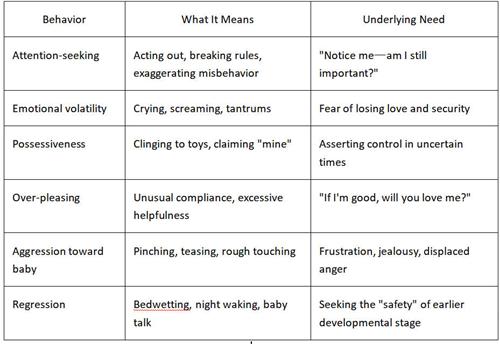
These reactions are rooted in the firstborn's sense of belonging and identity within the family. The first child suddenly experiences a perceived threat: the family's attention and affection are now divided, creating temporary emotional insecurity
The Science of Sibling Adjustment
Children internalize their parents' attention and care as markers of security. When these markers shift—even subtly—it can feel like personal loss. For example, a child who has been used to undivided parental focus may interpret a newborn's needs as rejection.
A 2018 longitudinal study published in Developmental Psychology observed that firstborns frequently experience "role anxiety," affecting their behavior and emotional regulation when a sibling arrives
Understanding these reactions as natural developmental responses (not defiance) helps parents respond with empathy rather than frustration.
Preparing the Firstborn Before Birth: Building Emotional Scaffolding
Proactive preparation is critical. Children who understand what is happening are more likely to feel secure.
1. Engage in Age-Appropriate Conversations
- Explain the arrival in simple, positive terms: "You will have a new friend who will grow up with you"
- Address fears directly: "Having a brother or sister doesn't mean we love you any less"
- Visit families with multiple children to help the firstborn see the joys of sibling companionship
2. Encourage Meaningful Involvement
Assign age-appropriate responsibilities before birth:
- Picking out baby clothes or toys
- Choosing a special gift "from big sibling to baby"
- Helping set up the nursery
This cultivates a sense of agency and importance. Emphasize their unique role as the "older sibling" without burdening them with adult responsibilities.
3. Affirm Emotional Security
Research published in Child Development Perspectives suggests that pre-birth emotional preparation reduces sibling rivalry and promotes early attachment
Reassure your child frequently—with words and gestures—that they remain a cherished and central family member.
Caring for the Firstborn After Birth: The Critical First Months
1. Protect One-on-One Time
Even brief, consistent periods of exclusive attention signal to the firstborn that their bond with parents remains strong:
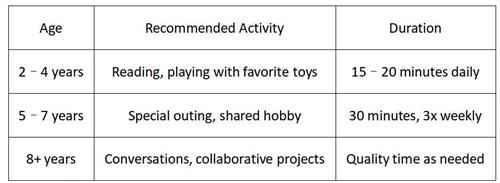
This helps maintain emotional stability and reduces jealousy.
2. Eliminate Comparisons
Never compare behaviors: "Why can't you be like your little brother?"
Recognize each child's uniqueness—the firstborn is not competing with the younger, but growing alongside them. Avoid teasing about love or affection, as this erodes trust in parent-child relationships.
3. Set Clear, Fair Boundaries
- Use private discussions for correction rather than public scolding
- Share resources thoughtfully without enforcing constant concession from the elder
- When conflicts arise, facilitate cooperative problem-solving rather than dictating solutions
Clinical Case Study
In a family observed by child psychologist Dr. Ye (2025), the eldest daughter initially acted out when the baby arrived—tantrums, refusal to share, and nighttime waking. The parents maintained consistent one-on-one time, allowed her to help in small ways (fetching diapers, singing to baby), and acknowledged her feelings: "It's hard when things change. You miss having Mommy all to yourself."
Within weeks, she became protective and caring toward her sibling, demonstrating the power of empathy-based guidance combined with preserved special status.
Building Sibling Relationships: From Rivals to Teammates
1. Encourage Cooperation and Teamwork
Introduce simple collaborative tasks:
- Helping with feeding or holding toys (under supervision)
- Completing joint art or play projects
- "Team" cleanup activities
Research in Child Development Perspectives highlights that siblings who engage in cooperative play develop stronger emotional regulation, empathy, and problem-solving skills
2. Gradual Integration
Allow the firstborn and newborn to spend time together in controlled, positive environments. Celebrate small successes:
- "You made the baby smile!"
- "She loves when you sing to her"
- "You're such a helpful big sister/brother"
A mother reported that her eldest, initially resistant, became proud of her "helper" role once she realized the baby was dependent on her contributions. Over time, she voluntarily assisted, showing both love and responsibility without coercion.

Age-Specific Guidance: Tailoring Your Approach
Ages 2–7: Teaching Obedience and Empathy
- Children rely heavily on parental cues to understand fairness
- Reinforce positive behaviors with attention rather than punitive measures
- Help them verbalize feelings: "It's okay to feel upset; let's find a way to share"
Ages 8–11: Encouraging Moral Reasoning
- Children begin to internalize rules and fairness concepts
- Support independent judgment while modeling empathy
- Encourage recognition of younger sibling's needs without demanding sacrifice of the elder's rights
Age 12+: Promoting Justice and Autonomy
- Adolescents can assess fairness and compromise logically
- Encourage nuanced decision-making: distributing resources based on abilities and needs rather than rigid equality
- Reinforce that love is abundant, not limited, and each child's emotional needs are valid
Maintaining Emotional Balance in the Household
Avoid the "Impartial Judge" Trap
Over-involvement or rigid enforcement of "fairness" can backfire. Parents should mediate conflicts to foster understanding, not impose judgments that create resentment.
Case Study: In the Zeng family (2025), the father punished both children equally for misbehavior but then privately guided the younger on fairness and empathy. This approach prevented resentment and cultivated mutual respect.
Conflicts resolved jointly—where both children discuss feelings and compromise—often strengthen sibling bonds rather than damage them.
Prioritize Emotional Needs Strategically
When both children cry or demand attention simultaneously:
- Attend to safety first (if baby is in distress)
- Acknowledge the elder immediately: "I hear you. I'll help you right after I settle the baby"
- Follow through promptly to build trust
This subtle prioritization reinforces the firstborn's security while the younger sibling observes cooperative care.
Managing Extended Family
Educate grandparents and relatives about age-appropriate fairness:
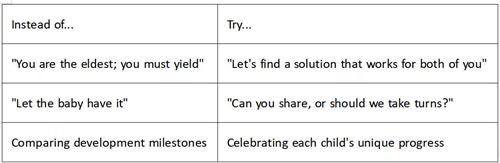
Extended family can be powerful allies when guided to validate the firstborn's position while nurturing the newborn.
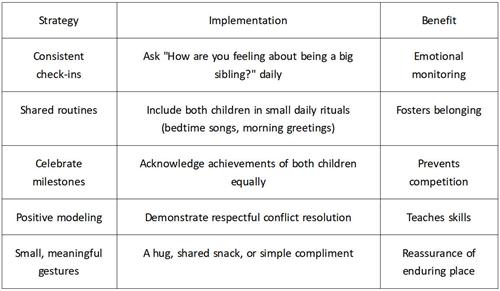
Practical Daily Strategies
When to Seek Professional Support
Despite best preparation, some firstborns may struggle significantly. Consult a child psychologist or family therapist if you observe:
- ⚠️ Persistent aggression toward siblings (beyond initial adjustment period)
- ⚠️ Withdrawal or refusal to engage with family
- ⚠️ Regressive behaviors that do not improve after 2–3 months
- ⚠️ Intense emotional distress affecting sleep, appetite, or school performance
- ⚠️ Statements of self-harm or excessive guilt
Early intervention can prevent long-term emotional consequences and promote healthy sibling relationships. Many family therapists specialize in sibling adjustment and can provide targeted strategies.
Conclusion: Love Multiplies, It Doesn't Divide
Welcoming a second child can be a time of growth, not conflict, when approached with awareness, empathy, and intentionality. By understanding the firstborn's needs, fostering emotional security, encouraging cooperation, and guiding siblings through age-appropriate interactions, parents can transform potential rivalry into lasting bonds.
Remember: Love is abundant. Each child is unique and irreplaceable, and with thoughtful care, the family can thrive together.
Medical Disclaimer
This article is intended for general informational purposes only and is not a substitute for personalized advice from a qualified mental health professional. If your child exhibits persistent behavioral changes, aggression, or emotional distress, consult a licensed child psychologist or your pediatrician.
Resources for Support:
- American Academy of Child & Adolescent Psychiatry: www.aacap.org
- National Parent Helpline: 1-855-427-2736
- Find a child psychologist: locator.apa.org
About the Author
Claire Morgan, LCSW, is a Licensed Clinical Social Worker with extensive experience in family therapy, child psychology, and parenting guidance. She combines evidence-based approaches with humanistic care to offer practical, compassionate strategies for nurturing healthy family relationships, emotional resilience, and positive sibling interactions.
The author holds an active LCSW license and continues to engage in clinical work at the Shanghai Child and Adolescent Mental Health Center.
Reviewed by: Sarah Chen, MD, FAAP
Review Date: March 2026
Next Review: January 2027
References
[1] Brody, G. H., & Stoneman, Z. (2020). Sibling relationships and the development of empathy and prosocial behavior. Child Development Perspectives, 14(2), 75–81. https://doi.org/10.1111/cdep.12366
[2] Volling, B. L., Yu, T., Gonzalez, R., Kennedy, D. E., Rosenberg, L., & Oh, W. (2018). Children's adjustment and sibling relationships after the birth of a sibling: A longitudinal study. Developmental Psychology, 54(1), 36–50. https://doi.org/10.1037/dev0000429
[3] Psychology Today. (2019). Why firstborns struggle with new siblings. https://www.psychologytoday.com/us/blog/family-secrets/201903/why-firstborns-struggle-with-new-siblings
Related Articles
How to Save Your Parent-Child Relationship from the Brink of Collapse
Co-Parenting After Divorce: Protecting Your Child's Emotional Well-Being
The Science of Emotional Regulation for Parents
Recommend for you:
10 Low-Cost Hobbies That Help Mothers Rebuild Purpose and Joy
Losing a job in mid-life creates more than financial disruption—it fundamentally challenges identity. One day, you are defined by meetings, deadlines, and professional contribution.
Beyond Rewards and Punishments: An Evidence-Based Guide to Nurturing Children's Intrinsic Motivation
When a child's grades drop or interest in learning fades, most parents don't hesitate. They offer what feels helpful: extra screen time, a new toy, a trip, money.
Healing Through Connection: A Guide to Supporting Foster Children's Emotional Needs
This comprehensive guide explores the unique emotional needs of foster children and offers effective coping strategies. With real-life insights from experienced foster mothers and trauma therapists, it provides practical advice for foster parents.
Emotional Stability Is Not a Personality Trait: A Real-Life Parenting Guide for Single Mothers Under Pressure
Feeling overwhelmed as a single mother? This evidence-based parenting guide explores how emotional stability is built—not forced—through practical pauses, realistic boundaries, and repair, helping children grow secure even in imperfect conditions.