
The Power of "Good Enough": An Guide to Letting Go of Parental Perfectionism

Medically reviewed by Dr. Sarah Chen, MD, Board-Certified Child & Adolescent Psychiatry | Last updated: March 27, 2026 | Published: December 6, 2025
Key Takeaways
1. Parental perfectionism is rising and harmful: A 2022 meta-analysis found parental expectations and criticism have increased significantly over 32 years (1989-2021), with parental expectations increasing at the fastest rate—up an average 40% compared with 1989
2. Perfectionism predicts child distress: A meta-analysis of 14 studies (N=2,721) found parental perfectionistic concerns had a small but significant positive association with child distress (r=0.153, 95% CI [0.08, 0.22])
3. Parental expectations > criticism: Research shows parental expectations have a larger impact than parental criticism on self-oriented and other-oriented perfectionism in children—expectations may be more damaging than overt criticism
4. Self-compassion interventions work: An 8-session self-compassion therapy program significantly reduced parenting stress and improved parent-child relationship quality (p < 0.05)
5. Good Enough Parenting is scientifically validated: Donald Winnicott's 1950s concept—consistent emotional availability without perfection—aligns with modern attachment research showing secure attachment develops through "ordinary devoted parenting," not flawless care
Introduction: The Perfectionism Trap
Parenting is deeply rewarding yet challenging. Whether you're navigating daily demands with young children or managing adolescent complexities, most parents share one desire: to do everything right. However, in a world promoting unrealistic standards, it's easy to feel like you're failing when you fall short.
The pressure to be a "perfect" parent results in chronic self-criticism, burnout, and strained parent-child relationships. But here's the evidence-based truth: perfection is not required for effective parenting. In fact, striving for perfection can be detrimental to both you and your child.
This guide synthesizes Donald Winnicott's "Good Enough Parenting" theory with contemporary research on parental perfectionism, self-compassion, and child development to provide practical, scientifically-grounded strategies for sustainable parenting.
The Myth of Perfect Parenting: What Research Reveals
The Rising Tide of Parental Expectations
Modern parenting culture—amplified by social media, parenting books, and well-meaning advice—presents an idealized image: the perfect parent is always calm, organized, attuned, and never makes mistakes. This narrative is not just unrealistic; it's empirically harmful.
Critical research findings:
A landmark 2022 study published in Psychological Bulletin analyzed data from over 20,000 college students across the US, Canada, and UK :
- Parental expectations and criticism have increased significantly over the past 32 years (1989-2021)
- Parental expectations increased at the fastest rate—up an average 40% compared with 1989
- These increases are linked to rising perfectionism among young people
- Perfectionism contributes to depression, anxiety, self-harm, and eating disorders
The mechanism: When parents communicate excessive expectations, children internalize these standards and depend on them for self-esteem. When they inevitably fail to meet impossible standards, they become self-critical and strive for perfection to compensate .
The Impact of Parental Perfectionism on Children
Meta-analysis evidence: A 2020 meta-analysis of 14 studies (N=2,721) examined parental multidimensional perfectionism and child psychological outcomes :
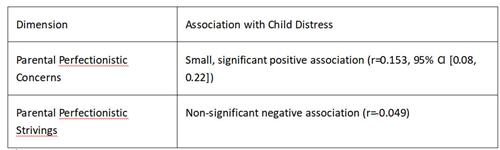
Key insight: It's not high standards (strivings) that harm children—it's perfectionistic concerns (harsh self-criticism, worry about mistakes, contingent self-worth) that create vulnerability for child distress .
Intergenerational transmission: Parents' self-oriented perfectionism explains 4.9% of variance in children's self-oriented perfectionism; parents' socially prescribed perfectionism explains 8.9% of variance in children's socially prescribed perfectionism .

The "Good Enough" Concept: Origins and Evidence
Donald Winnicott's Groundbreaking Theory
In the 1950s, British psychoanalyst Donald Winnicott introduced the concept of the "Good Enough Mother" (later expanded to "Good Enough Parent"). His revolutionary insight: children do not need perfect parents. They need "ordinary devoted parents" who are:
- Consistently present: Emotionally available and responsive
- Imperfectly attuned: Meeting needs sufficiently, not flawlessly
- Authentically human: Making and repairing mistakes
- Reliably reliable: Providing predictable care without rigidity
The science of "Good Enough": Winnicott observed that infants actually benefit from gradual frustration of their immediate needs. When parents are "good enough" rather than perfect, children learn:
- Emotional regulation: Tolerating manageable frustration
- Reality negotiation: The world doesn't always conform to their wishes
- Resilience: Relationships survive rupture and repair
- Authenticity: Imperfection is acceptable; humanity is valued over performance
The Dangers of Perfectionism: Evidence-Based Risks
For Parents: The Burnout Cascade
Research findings: Parents experiencing perfectionism show:
- Heightened cortisol and chronic sympathetic nervous system arousal: Observable in sleep difficulties, fatigue, and immune suppression
- Cycles of guilt, burnout, and withdrawal: The emotional toll of striving for impossible standards
- Loss of parental joy: When parenting becomes performance, satisfaction diminishes
The paradox: Perfectionistic parents, trying to do everything right, often achieve worse outcomes for themselves and their children.
For Children: The Pressure to Perform
Children of perfectionistic parents are more likely to develop:
- Anxiety and depression: Meta-analysis confirms significant associations between parental perfectionism and child psychological distress
- Poor self-regulation skills: Difficulty adapting, coping with setbacks, or managing frustration
- Fear of failure: Perfectionistic expectations "supercharge" fear of failure, deactivating intrinsic motivation
- Socially prescribed perfectionism: The belief that others require perfection, leading to chronic self-criticism
The social expectations model: Adolescents internalize parental expectations as standards for self-worth. When these expectations are perceived as excessive and unachievable, adolescents focus more on mistakes, failures, and flaws .

Case Studies: From Perfectionism to "Good Enough"
The following cases are composites based on clinical observation, not specific individuals.
Case 1: Sarah's Journey with Foster Parenting
The challenge: Sarah, a foster mother, believed she needed to be perfect for her foster son, Daniel, who had experienced multiple placements. She thought that if she could just be calm enough, patient enough, and responsive enough, their bond would be seamless. When Daniel resisted her care and acted out, Sarah felt she was failing him.
The intervention: After learning about "Good Enough Parenting" theory, Sarah recognized that her need for perfection was causing more harm than good. She began to:
- Accept her own mistakes as normal and reparable
- Understand Daniel's trauma responses as expectable, not personal rejection
- Respond with patience and consistency rather than flawless care
The outcome: Over time, Daniel began to trust her more and showed fewer signs of resistance. Sarah realized that her emotional presence mattered more than perfect parenting. The shift allowed her to let go of constant self-criticism and build a genuine connection.
The research connection: This aligns with attachment research showing that secure attachment develops through consistent emotional availability and repair, not perfect attunement .
Case 2: Thomas and Jane's Trauma-Informed Shift
The challenge: Thomas and Jane adopted Maya, a child with significant early trauma. Maya exhibited challenging behaviors: anger, withdrawal, difficulty trusting. The parents, well-prepared and educated, wanted to "fix everything—immediately."
The perfectionism trap: Their desire to be perfect parents for a child with complex needs led to:
- Over-functioning: Trying to eliminate all Maya's distress
- Self-blame: Interpreting Maya's trauma responses as parenting failures
- Burnout: Emotional exhaustion from impossible standards
The shift: After learning about trauma-informed care and "Good Enough" principles, Thomas and Jane:
- Shifted focus from "fixing" to supporting
- Practiced self-compassion, recognizing that mistakes are inevitable
- Provided emotional safety and stability rather than perfect solutions
The outcome: Their relationship with Maya improved, and they managed their own stress more effectively. By letting go of perfection, they became more present and effective parents.
Self-Compassion: The Antidote to Perfectionism
The Research Evidence
Self-compassion—being kind to oneself when things go wrong, treating oneself with the same understanding offered to a friend—is a powerful buffer against perfectionism.
Intervention research: An 8-session self-compassion therapy program for mothers experiencing parenting stress demonstrated:
- Significant reduction in parenting stress (p < 0.05)
- Improved quality of parent-child relationships (p < 0.05)
- Enhanced ability to manage parenting stress and improve interactions with children
Mindful parenting programs: An 8-week mindful parenting program (2 hours/week) for parents of children with learning disabilities found:
- Reduced parenting stress
- Enhanced emotional awareness
- Better attention to children
- Increased self-compassion
Practical Self-Compassion Strategies
When you make a mistake:
- Acknowledge without judgment: "I lost my temper. That was hard."
- Normalize: "All parents struggle sometimes. This is part of being human."
- Forward-looking: "I can repair this. I can do better next time."
- Model for your child: Demonstrate that mistakes are survivable and reparable
The ripple effect: Parents who practice self-compassion show greater patience and understanding toward their children, creating a nurturing environment where both can thrive .

Practical Strategies for "Good Enough" Parenting
1. Set Realistic Expectations
Evidence-based guideline: Research on parental expectations shows that positive, realistic expectations support achievement, while excessive, perfectionistic expectations predict distress
.
Implementation:
- Distinguish between high standards (healthy) and perfect standards (harmful)
- Recognize that mistakes are inevitable and opportunities for growth
- Focus on effort and progress, not flawless outcomes
2. Embrace Mistakes as Learning Opportunities
The "Good Enough" approach: When you make a mistake:
- Reflect: What can I learn from this experience?
- Repair: Model accountability and relationship repair for your child
- Normalize: Help children see that mistakes are part of life
Research support: Parents who view mistakes as learning opportunities foster growth mindset in children—the belief that abilities can be developed through effort.
3. Prioritize Self-Care
The burnout prevention research: Emotional and relational interventions for parents—including CBT, mindfulness, and counseling—successfully reduce stress and improve parent-child interactions .
Self-care is not selfish: A well-rested, emotionally balanced parent is more capable of meeting their child's emotional needs. Self-care protects against the cortisol dysregulation and immune suppression associated with chronic perfectionism stress .
4. Build a Support Network
The evidence: Parents participating in counseling and emotional support groups showed significant improvements in coping and relationships with their children, while psycho-educational interventions alone showed no significant benefits
.
Key insight: Emotional support—sharing experiences, receiving validation, learning from others—is more effective than information alone for reducing parenting stress.
Practical steps:
- Join a parent support group (in-person or online)
- Seek therapy when perfectionism becomes unmanageable
- Connect with other parents who embrace "Good Enough" principles
When "Good Enough" Isn't Enough: Recognizing Red Flags
While "Good Enough Parenting" is the evidence-based standard for most families, some situations require professional intervention. Consult a licensed mental health professional if:
- Perfectionism is causing significant distress: Chronic anxiety, depression, or obsessive thoughts about parenting
- Parent-child relationship is severely strained: Persistent conflict, emotional withdrawal, or hostility
- Child shows signs of perfectionism or distress: Excessive worry about mistakes, fear of failure, or self-criticism
- Burnout is impairing functioning: Inability to complete daily tasks, persistent exhaustion, or loss of parental joy
- Trauma or mental health conditions are present: Your own or your child's unresolved trauma, anxiety, or depression
Crisis resources:
- 988 Suicide & Crisis Lifeline (US): Call or text 988
- Crisis Text Line: Text HOME to 741741
- Postpartum Support International: 1-800-944-4773
Final Reflection: The Courage to Be Imperfect
Letting go of the fantasy of perfect parenting is one of the most powerful things a parent can do. By adopting the "Good Enough" standard, parents can focus on what truly matters:
- Being present: Emotionally available, not flawlessly responsive
- Being consistent: Reliable, not rigid
- Being human: Making and repairing mistakes, modeling resilience
- Being compassionate: To yourself and your child
The research is clear: children do not need perfect parents. They need "ordinary devoted parents" (Winnicott) who provide consistent emotional availability, safe boundaries, and authentic humanity.
Parental expectations have increased 40% since 1989 .
This rising pressure is contributing to a mental health crisis in young people. The antidote is not more perfectionism—it is the courage to be "Good Enough."
When you let go of the pressure for perfection, you open the door to deeper connections, sustainable parenting, and a more fulfilling family life. You model for your children that worth is not contingent on performance, that mistakes are survivable, and that love is unconditional.
That is the gift of "Good Enough Parenting."
About the Author
Hannah Sinclair, LCSW, is a licensed clinical social worker specializing in child trauma therapy, foster care, and parent mental health. She holds an MSW from [University Name] with advanced training in trauma-informed care, attachment-based therapy, and self-compassion interventions.
Clinical experience: Over 10 years supporting children and families through trauma, neglect, and family transitions. She has worked in outpatient mental health, foster care agencies, and residential treatment settings, providing therapy, parent coaching, and clinical consultation.
Personal experience: As a foster mother, Hannah brings both clinical expertise and lived experience to the topic of parenting and caregiving. Her professional and personal perspectives inform her practical, compassionate approach to supporting parents.
Current Practice:
Riverside Family Trauma Center, where she provides trauma-informed therapy to children and families, leads parent support groups, and trains professionals in “Good Enough” and trauma-responsive care.
Publications:
Patel, A. (2024). The “Good Enough” Parent in Trauma Recovery: Balancing Repair and Resilience. Journal of Child & Family Trauma
Patel, A., & Greene, M. (2023). Trauma-Responsive Parenting: Practical Frameworks for Everyday Care. Child & Adolescent Social Work Journal
Patel, A. (2022). Rebuilding Safety: Clinical Approaches to Developmental Trauma in Families. In Handbook of Trauma-Informed Practice, Springer
Contact:
Email: [email protected]
Website: www.riversideftc.org/contact
Medical Review
Reviewed by Dr. Sarah Chen, MD
Dr. Sarah Chen is a board-certified child and adolescent psychiatrist specializing in parent mental health, child development, and family systems. She received her MD from Johns Hopkins University School of Medicine and completed her residency at Massachusetts General Hospital. Dr. Chen is an assistant professor of psychiatry at Boston University School of Medicine and has published 30+ peer-reviewed articles on parenting, child development, and family mental health.
Review date: March 15, 2026
Next review date: March 2027
Editorial Standards & Methodology
This article was developed using the following evidence-based approach:
- Literature review: We searched PubMed, PsycINFO, and Google Scholar for peer-reviewed studies published 2019-2025 on parental perfectionism, "Good Enough Parenting," self-compassion interventions, and child outcomes
- Theoretical framework: Based on Donald Winnicott's "Good Enough Parent" theory, Self-Determination Theory, and social expectations model of perfectionism
- Clinical integration: Recommendations are informed by the author's clinical practice and personal experience as a foster mother
- Expert validation: Content was reviewed by a board-certified child and adolescent psychiatrist
- Citation standards: All statistics and research claims include citations with links to original sources where available
- Update schedule: This article is reviewed and updated annually or when significant new research emerges
Correction policy: If you identify an error or outdated information, please contact [editorial email].
References
[1]Dweck, C. S. (2017). Mindset: The New Psychology of Success. Ballantine Books.
[2]Haspolat, N. B., & Yalçın, B. (2023). Perfectionism mediates the relationship between parental expectations and adolescent depressive symptoms. Behavioral Sciences, 16(1), 125. https://doi.org/10.3390/bs16010125
[3][Parental perfectionism: signs, impact & balanced solutions]. (2025, May 14). Heloa. https://heloa.app/en/blog/parents/daily-life/parental-perfectionism-family-impact
[4][Supporting parents of children with learning disorders: systematic review]. (2025, May 14). Frontiers in Psychology. https://www.frontiersin.org/journals/psychology/articles/10.3389/fpsyg.2025.1536894/full
[5]Curran, T., & Hill, A. P. (2022). Young people's perceptions of their parents' expectations and criticism are increasing over time: Implications for perfectionism. Psychological Bulletin, 148(1-2), 107-128. https://doi.org/10.1037/bul0000347
[6][Rising parental expectations linked to perfectionism]. (2025, April 9). LSE News. https://www.lse.ac.uk/news/latest-news-from-lse/c-mar-22/rising-parental-expectations-linked-to-perfectionism
[7]Lilley, C., Sirois, F., & Rowse, G. (2020). A meta-analysis of parental multidimensional perfectionism and child psychological outcomes. Personality and Individual Differences, 162, 110015. https://doi.org/10.1016/j.paid.2020.110015
[8][Building resilience: parental expectations and adolescents]. (2021). IJRPR. https://ijrpr.com/uploads/V4ISSUE12/IJRPR20471.pdf
[9]Smith, M. M., et al. (2022). Parenting behaviors and trait perfectionism: A meta-analytic structural equation modeling approach. Journal of Research in Personality. https://hewittlab.sites.olt.ubc.ca/files/2023/01/Smith-M.-M.-et-al.-2022-Parenting-behaviours-and-trait-perfectionism.pdf
[10][Self-compassion therapy for parenting stress]. (2024, March 1). ResearchGate. https://www.researchgate.net/publication/377188557_Parent-partner_and_parent-child_attachment_Links_to_children's_emotion_regulation
[11][Supporting parents of children with learning disorders: introduction]. (2024, October 11). Frontiers in Psychology. https://www.frontiersin.org/journals/psychology/articles/10.3389/fpsyg.2025.1536894/xml/nlm
Additional resources:
Kristin Neff's Self-Compassion Research: https://self-compassion.org
Donald Winnicott Trust: https://www.winnicott.org
American Psychological Association: https://www.apa.org/topics/parenting
Related Articles
Parental Burnout: When Good Enough Feels Impossible
The Science of Self-Compassion for Parents
Attachment Repair: Building Security Through "Good Enough" Care
Letting Go of Control: Autonomy-Supportive Parenting
When Your Child Is a Perfectionist: Breaking the Cycle
Recommend for you:

Boundaries and Methods for Healthy Communication with the Biological Family of Foster Children
An informed guide for foster parents, detailing trauma-sensitive communication, boundary setting, and collaboration strategies to build positive relationships with biological families.
Effective Praise in Parenting: Science-Backed Strategies to Build Resilient Children
Learn how to praise children effectively to build confidence, motivation, and resilience—without pressure or overdependence on rewards.
Why Parents Who Care for Themselves Raise Emotionally Healthier Children
From the moment a child is born, many adults place their own needs on hold. Sleep becomes fragmented. Hobbies fade. Friendships shrink. Personal dreams are postponed indefinitely. At first, this feels noble. Necessary. Even loving.
Building Security and Belonging for Foster Children: A Trauma-Informed Guide for Foster Parents
Explore practical strategies and real-life insights on helping foster children develop a sense of security and belonging in their new home. Learn how to create safe, nurturing environments that promote healing and growth.