How Parents Build Strength Through Community—and Raise Stronger Children Because of It
Last updated:March 27th, 2026
Reviewed by: Dr. Rebecca M. Collins, LCSW
Reading time: 7 minutes
Key Takeaways
1. Parent communities reduce burnout, increase confidence, and improve child outcomes
2. Parenting strength grows faster in connection than in isolation
3. Self-rescue is not individual heroism, but shared responsibility
4. Children benefit directly when parents build mutual support systems
5. Healthy communities balance boundaries, honesty, and mutual contribution
6. Sustainable parenting focuses on long-term life quality, not short-term fixes
Introduction: The Hidden Isolation of Modern Parenting
Many parents quietly share the same thought, even if they never say it out loud:
“I’m holding on—but I’m holding on alone.”
Modern parenting often looks independent on the surface, yet deeply isolated underneath. Parents manage diagnoses, school transitions, emotional storms, and long-term uncertainty largely on their own. Help exists, but it is fragmented: a doctor here, a teacher there, a course watched late at night after the children sleep.
What is often missing is a living system of people—those who understand not only the child, but the parent behind the child.
Across cities, neighborhoods, and online spaces, something powerful is quietly forming: parent-led communities. Not charities. Not institutions. But parents organizing together—not to complain, but to build a life that works.
Self-Rescue Is Not About Being Stronger—It’s About Not Being Alone
In Beijing, a father named Feng Tao did not begin as a community builder. He began as a parent facing a diagnosis.
After his son Xiaoguo was diagnosed with an intellectual disability, Feng Tao retired from a 26-year military career to care for him full-time. Like many parents, his early focus was singular: intervention, progress, protection.
But over time, he recognized a deeper challenge—sustainability.
- Who would support his child in adulthood?
- What would daily life look like when institutions were unavailable?
- What happens when parents grow old?
Rather than waiting for answers, he began connecting parents—first through WeChat, then through neighborhoods, then through shared activities. Slowly, 31 parent communities formed, supporting over 1,500 families.
This was not heroism. It was realism.
“Money can be solved through trusts,” Feng Tao said. “But people are the core issue.”
Children Change When Parents Change the Environment
One of the most overlooked truths in parenting is this:
Children don’t grow in isolation—they grow inside systems.
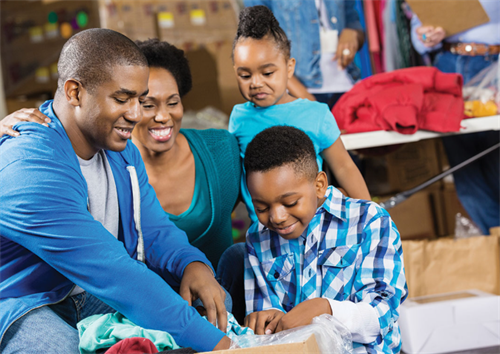
When parents meet regularly, share resources, and support one another, children experience tangible benefits:
- Increased social exposure
- Stronger self-care skills
- Safer opportunities to practice independence
- A sense of belonging beyond the family
In Feng Tao’s communities, children went hiking, sang together, visited parks, and volunteered. These were not therapy sessions. They were ordinary life experiences, made accessible through collective effort.
Research supports this effect. Studies show that children whose families are embedded in supportive communities demonstrate better adaptive functioning and emotional regulation, especially when facing developmental challenges [1].
Why Community Matters More Than Advice
Many parents have read the books. Taken the courses. Consulted professionals.
And yet, in daily life, they still ask:
“What do I do right now?”
Parent communities function as living laboratories.
When one parent shares, “My child stayed overnight at another family’s home for the first time,” dozens of others don’t just hear a story—they see a future possibility.
Hope becomes concrete.
Psychological research calls this vicarious resilience: seeing others navigate challenges successfully increases one’s own confidence and capacity [2].
- Advice informs.
- Community transforms.
The Quiet Power of Shared Emotional Labor
In one parent group supporting families of children with depression, a simple practice changed everything: a daily emotional check-in.
Parents shared one sentence:
“How do I feel today—and why?”
No fixing. No correcting. Just witnessing.
Over time, parents noticed changes:
- Less self-blame
- More emotional awareness
- Calmer responses to children’s distress
Neuroscience explains why. Social support increases oxytocin and lowers cortisol, buffering chronic stress [3]. This is not emotional softness—it is biological regulation.
When parents feel steadier, children feel safer.
Good Communities Are Built, Not Declared
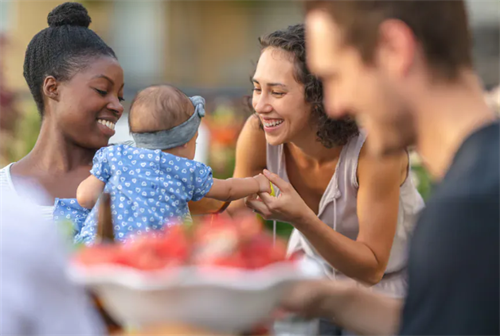
Strong parent communities do not appear overnight. They are shaped deliberately.
Step 1 — Start With Real Benefit
Communities grow when parents see immediate value: a free activity, shared childcare, emotional relief.
Step 2 — Encourage Participation, Not Perfection
Simple rules, small commitments, and flexible roles keep parents engaged without burnout.
Step 3 — Develop Leaders Gradually
Leadership emerges through practice. Parents grow into responsibility when supported, not forced.
Feng Tao learned this the hard way. In early summer camps, he did everything himself—until exhaustion made collaboration necessary. When tasks were shared, competence multiplied.
Community is not efficiency.
Community is capacity building.
Boundaries Are What Make Community Sustainable
Healthy communities balance closeness with limits.
Effective parent groups:
- Respect privacy
- Avoid constant availability
- Allow members to step back when needed
This protects parents from a common trap: replacing isolation with over-commitment.
Attachment research shows that secure systems—whether families or communities—require both accessibility and autonomy [4].
Mothers Need “In-Sync” Companions—Not Just Company
Many mothers describe loneliness not as lack of people, but lack of resonance.
“In-sync” parenting relationships are built on:
- Shared values
- Emotional honesty
- Mutual growth
Studies show mothers with at least one aligned parenting partner report significantly lower anxiety and higher confidence [5].
These relationships don’t require sameness—but constructive difference.
What Children Learn When Parents Support Each Other
When children grow up seeing parents:
- Ask for help
- Collaborate
- Share responsibility
They learn that:
- Problems are solvable
- Vulnerability is safe
- Community is normal
This may be one of the most powerful life lessons parents can offer.
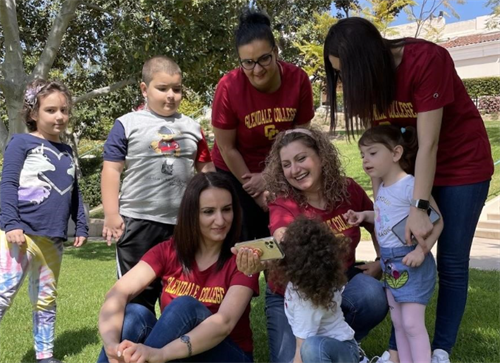
How to Find Parent Communities
Many parents agree that community matters—yet finding one can feel surprisingly hard. Parenting already stretches time and energy, and starting new social connections may feel like one more task on an already full list.
The good news is that parent communities are rarely built all at once. They grow through small, realistic steps.
ApproachWhy It WorksPlaygrounds, libraries, playgroupsNatural settings allow parents to connect without pressure. Familiarity builds trust over time.Online parenting groupsLocal or interest-based groups work best when they encourage respectful discussion. Gradual offline connections strengthen support.Classes and workshopsRepeated contact around shared goals helps relationships develop organically.Community centers, volunteering, school activitiesThese often bring together parents with similar values and daily realities.Reconnecting with old friendsEven parents in different stages can quietly rebuild a sense of belonging.
Not every group will be the right fit. Healthy parent communities respect differences, allow boundaries, and reduce pressure rather than add to it.
Start small. One regular meeting, one shared activity, or one honest conversation can be enough.
Community is not about doing more—it’s about not doing everything alone.
Conclusion: Parenting Was Never Meant to Be a Solo Act
Parenting strength does not come from enduring more.
It comes from connecting wisely.
When parents build communities, they are not giving up responsibility—they are expanding it. They are shaping environments where children can grow into adulthood with dignity, support, and belonging.
Self-rescue, in its truest form, is collective.
About the Author
Dr. Rebecca M. Collins, LCSW
Licensed Clinical Social Worker | Family Resilience Center
Dr. Collins is a licensed mental health professional with over 12 years of experience in child development, family systems, and trauma-informed parenting support. She has worked extensively with families navigating developmental differences, emotional challenges, and long-term caregiving responsibilities, including multi-generational households.
She is affiliated with the Family Resilience Center, a U.S.-based non-profit organization dedicated to family systems therapy, caregiver support, and evidence-informed parenting education. Her work integrates psychological research with real-world community practice, emphasizing sustainable parenting, emotional resilience, and healthy intergenerational relationships.
Disclosure: The Family Resilience Center has no financial relationships with any organizations mentioned in this article.
Editorial Review
This article was reviewed by:
Dr. Jonathan S. Chen, PhD
Clinical Psychologist, Board-Certified in Child & Adolescent Psychology
Review date: March 27th, 2026
Dr. Chen has no conflicts of interest to declare.
Medical & Psychological Disclaimer
This article is for educational purposes only and does not replace professional medical or psychological advice. Families facing significant challenges—including mental health crises, developmental concerns, or child welfare involvement—are encouraged to seek individualized support from qualified professionals.
If you are in crisis, please contact:
- National Parent Helpline: 1-855-427-2736 (U.S.)
- Crisis Text Line: Text HOME to 741741
References
[1] Shonkoff, J. P., & Garner, A. S. (2021). The lifelong effects of early childhood adversity and toxic stress. Pediatrics, 147(2). https://doi.org/10.1542/peds.2020-0044
[2] Southwick, S. M., et al. (2022). Resilience definitions, theory, and challenges. European Journal of Psychotraumatology, 13(1). https://doi.org/10.1080/20008198.2022.2063823
[3] Hostinar, C. E., & Gunnar, M. R. (2019). Social support and stress regulation. Psychological Science, 30(5). https://doi.org/10.1177/0956797619831117
[4] Bowlby, J. (2020). Attachment and loss: Vol. 1 (3rd ed.). Basic Books. (Original work published 1969)
[5] Dennis, C.-L., & Ross, L. (2020). Women’s perceptions of peer support. Journal of Advanced Nursing, 76(1). https://doi.org/10.1111/jan.14235
Recommend for you:
Effective Praise in Parenting: Science-Backed Strategies to Build Resilient Children
Learn how to praise children effectively to build confidence, motivation, and resilience—without pressure or overdependence on rewards.
Beyond Rewards and Punishments: An Evidence-Based Guide to Nurturing Children's Intrinsic Motivation
When a child's grades drop or interest in learning fades, most parents don't hesitate. They offer what feels helpful: extra screen time, a new toy, a trip, money.
Boundaries and Methods for Healthy Communication with the Biological Family of Foster Children
An informed guide for foster parents, detailing trauma-sensitive communication, boundary setting, and collaboration strategies to build positive relationships with biological families.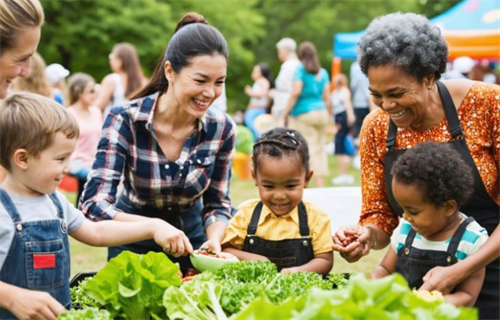
How Parents Build Strength Through Community—and Raise Stronger Children Because of It
Many parents quietly share the same thought, even if they never say it out loud: “I’m holding on—but I’m holding on alone.”