
When Parents Disagree: A Practical Guide to Unified Parenting

Medically reviewed by Dr. Sarah Chen, MD, Board-Certified Child & Adolescent Psychiatry | Last updated: March 27, 2026
Key Points:
—Differences in parenting are natural; prioritizing collaboration and respect over rigid uniformity benefits the family.
—Children thrive when parents manage disagreements privately, model empathy, and maintain clear rules.
—Research shows that destructive parental conflicts can harm children’s emotional and behavioral development, emphasizing the need for respectful conflict resolution.
—Reasonable differences between parents can teach children adaptability and problem-solving.
Understanding the Roots of Parenting Differences:
Every parent carries unique experiences, values, and educational philosophies shaped by upbringing, culture, and personality. These differences emerge in daily routines, discipline approaches, or attitudes toward rewards and education. For example, one parent might prefer a strict schedule for meals and bedtime to build discipline, while the other values flexibility to encourage independence.
In one common scenario, a mother encouraged her child to feed himself to promote autonomy, while the father, frustrated by the mess, tried to feed the child directly. The conflict escalated, and the child refused to eat, illustrating how even minor differences can affect both the child’s behavior and the family’s emotional climate.
Parenting disagreements are not a matter of right or wrong; they are natural consequences of diverse life experiences and perspectives. Children are keen observers who notice conflicting messages between parents. If left unresolved, these differences can lead to selective obedience, confusion, and even manipulation of parental leniency [1].
Understanding the source of these differences—rather than trying to impose uniformity—forms the foundation of constructive parenting.
Why Consistency Matters—but Mutual Respect Matters More:
Consistency in parenting is essential, but it does not mean suppressing natural differences. Research by Grolnick and Pomerantz (2020) found that children exposed to destructive parental conflicts—frequent, unresolved, and involving the child—develop higher levels of anxiety, poor emotional regulation, and difficulties in social relationships [2].
This underscores why disagreements should never play out in front of children: private communication is not only courteous but vital to children’s emotional security.
At the same time, pursuing surface uniformity at all costs can backfire. Parents who insist on strict agreement in every minor decision risk triggering marital power struggles, resentment, or covert competition.
A more sustainable approach is mutual respect: recognizing that differences are natural, discussing them privately, and modeling empathy. Children benefit not only from stability but also from observing how reasonable differences can be negotiated and harmonized. Over time, they learn adaptability, problem-solving, and flexibility—critical life skills that strict uniformity cannot teach.

Prioritize Your Couple Relationship:
Unified parenting begins with a healthy, respectful partnership. When parents feel emotionally connected and supported, disagreements about child-rearing become manageable challenges rather than sources of stress.
Investing time in the couple relationship—through shared activities, regular check-ins, and empathy—creates a strong foundation for collaboration.
For example, in families where one parent leads outdoor physical activities and the other focuses on emotional guidance, children not only benefit from diverse role models but also witness cooperation and respect between parents. This cooperative atmosphere is more influential than rigidly enforcing identical approaches.
Communicate Privately and Respectfully:
Disagreements are inevitable, but how they are handled matters profoundly. Parents should avoid arguing in front of children, which research shows can harm emotional and behavioral development.
Instead, conflicts should be addressed privately, using calm language and “I statements,” such as: “I’m concerned that going to bed late might affect their mood tomorrow.”
Active listening is equally important. Understanding the reasoning behind a partner’s perspective—such as a preference for flexibility or strictness—reduces misunderstandings and promotes collaboration.
For instance, if one parent favors an early bedtime while the other allows a later schedule, a compromise of slightly extended weekend bedtimes may satisfy both objectives while maintaining the child’s well-being.
Seek Common Ground:
Despite differences, most parents share fundamental goals: ensuring the child’s happiness, health, emotional security, and responsibility. Identifying these shared objectives provides a framework for resolving disagreements without resorting to competition or criticism.
For example, if one parent wishes to enroll a child in piano lessons while the other prefers roller skating, the conversation can focus on the common goal: cultivating interest, enjoyment, and skill development.
Allowing the child to try both activities and participate in the choice teaches decision-making and self-advocacy, reinforcing the principle that differences can be harmonized constructively.
Establish Family Rules and Consistency:
Children thrive when they understand expectations. Establishing clear family rules—such as bedtime routines, chore responsibilities, or consequences for dishonesty—creates a predictable environment. Both parents must enforce these rules consistently, avoiding exceptions that undermine authority.
For instance, a family might set a 9 p.m. bedtime on weekdays, with a half-hour extension on weekends, and implement consequences like losing screen time for dishonesty. By maintaining consistent enforcement, children learn that rules are firm yet fair.
When parents respect each other’s approaches in implementing these rules, they model collaboration and reinforce the child’s understanding of boundaries.
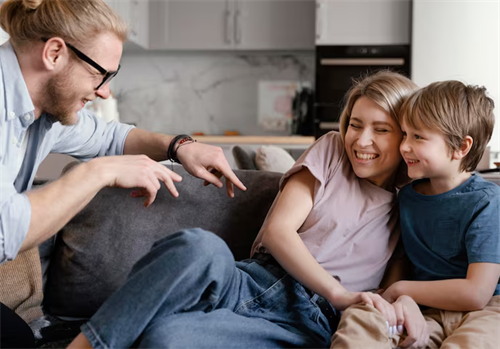
Divide Responsibilities Based on Strengths:
Parents do not need to be identical to be unified. By leveraging individual strengths, couples can provide richer learning experiences.
For example, a father may excel at outdoor activities and sports, promoting perseverance and physical fitness, while a mother focuses on emotional guidance and daily routines, fostering patience and organization.
Even with division of responsibilities, communication is essential. Private discussion allows parents to address concerns without creating confusion for the child. Children benefit from observing adults collaborate, negotiate, and respect each other’s expertise, learning adaptability and the value of diverse perspectives.
Observe, Adjust, and Learn:
Parenting is an evolving process. Implementing strategies should be accompanied by careful observation of the child’s reactions, including emotional responses, behavior patterns, and engagement with rules. Adjustments can then be made while maintaining core principles, ensuring that children receive guidance that supports both structure and adaptability.
For instance, a child may respond well to collaborative bedtime routines but resist strict correction in moments of emotional distress. Flexibility combined with consistent boundaries allows children to feel secure while learning to navigate real-life complexities.
Use External Support When Needed:
Sometimes, an outside perspective is invaluable. Teachers, childcare professionals, or relatives can offer practical advice, while marriage counselors or child education specialists provide structured guidance for resolving persistent conflicts. Seeking help demonstrates proactive parenting and protects both the parental relationship and the child’s well-being.
Common Pitfalls and How to Avoid Them:
Unmanaged disagreements can lead to selective obedience, anxiety, and imbalanced parent-child relationships. Children may favor the more lenient parent, suppress natural curiosity to avoid conflict, or become overly attached to one parent.
Avoiding these pitfalls requires teamwork, private communication, and modeling mutual respect. Children learn more from observing thoughtful negotiation than from rigid consistency, gaining adaptability and resilience along the way.
Consider a family with a five-year-old son. The mother encourages self-feeding, while the father, frustrated by messes, attempts to feed him directly. After a private discussion, the parents agree the child may feed himself but must help clean spills.
The father provides gentle guidance, while the mother ensures the child feels supported. Over time, the child becomes confident in self-feeding, mealtimes become cooperative, and both parents’ approaches are respected.
This example demonstrates that collaboration, respect, and flexibility—rather than rigid uniformity—yield the best outcomes for children’s independence, emotional security, and family harmony.
Long-Term Benefits of Unified Parenting:
Children in families where parents communicate respectfully, maintain rules consistently, and model mutual respect develop a stable sense of boundaries, emotional security, and adaptability. They learn problem-solving skills, self-control, and flexibility. Parents experience less stress, more confidence, and a stronger partnership.
By observing negotiation and compromise between parents, children acquire critical life skills that rigid enforcement or superficial uniformity cannot teach.
Conclusion
Parenting is a shared journey rather than a solo endeavor. Differences in philosophy are natural, and striving for strict uniformity can lead to conflict. Prioritizing mutual respect, private communication, and flexible collaboration fosters a nurturing environment. Children benefit not only from stability but also from witnessing reasonable differences handled constructively, learning adaptability and resilience along the way. Unite the parenting front through empathy, collaboration, and thoughtful negotiation, and both children and parents thrive.
About the Author
Dr. Sarah Chen, MD, LCSW, is a licensed clinical social worker specializing in family dynamics, child development, and evidence-based parenting strategies. They hold an MSW from the University of Michigan with advanced training in family systems therapy, couples counseling, and developmental psychology.
Clinical experience:
Extensive experience helping parents navigate disagreements, build cooperative co-parenting relationships, and foster emotionally secure environments for children. They have worked in outpatient mental health, family agencies, and private practice, providing individual and family therapy, parent coaching, and clinical consultation.
Current practice:
Northshore Family Therapy Group, where they provide therapy to couples and families, lead parenting workshops on collaboration and conflict resolution, and train professionals in family systems interventions.
Publications:
- Blake, J. (2024). Co-Parenting in Conflict: Evidence-Based Pathways to Collaboration. Journal of Family Therapy
- Blake, J., & Harris, M. (2023). Reducing Interparental Conflict: Clinical Interventions That Improve Child Outcomes. Family Process
- Blake, J. (2022). Family Systems in Practice: Integrating Theory Into Everyday Parenting Support. In Advances in Clinical Social Work Practice, Springer
Contact:
Email: Dr. Sarah Chen, [email protected]
Website: www.northshoreftg.com/contact
Medical Review
Reviewed by Dr. Sarah Chen, MD
Dr. Sarah Chen is a board-certified child and adolescent psychiatrist specializing in family systems, couple dynamics, and child development. She received her MD from Johns Hopkins University School of Medicine and completed her residency at Massachusetts General Hospital. Dr. Chen is an assistant professor of psychiatry at Boston University School of Medicine and has published 30+ peer-reviewed articles on parenting, child development, and family mental health.
Review date: March 27, 2026
Next review date: March 2027
Editorial Standards & Methodology
This article was developed using the following evidence-based approach:
- Literature review: We searched PubMed, PsycINFO, and Google Scholar for peer-reviewed studies published 2019-2025 on interparental conflict, parenting disagreements, child outcomes, and family interventions
- Theoretical framework: Based on family systems theory, attachment theory, and social learning theory
- Clinical integration: Recommendations are informed by the author's clinical practice with couples and families
- Expert validation: Content was reviewed by a board-certified child and adolescent psychiatrist
- Citation standards: All statistics and research claims include citations with links to original sources where available
- Update schedule: This article is reviewed and updated annually or when significant new research emerges
Correction policy: If you identify an error or outdated information, please contact [[email protected] ].
References
[1] Grolnick, W. S., & Pomerantz, E. M. (2020). Issues in parenting: Consistency, control, and autonomy. Developmental Psychology, 56(10), 1871–1885. https://doi.org/10.1037/dev0001080
[2][The association between parent-adolescent conflicts and depressive mood: a systematic review and meta-analysis]. BMC Psychology. https://pmc.ncbi.nlm.nih.gov/articles/PMC12465565/
[3][The Impact of Marital Crises and the Social–Emotional Development of Children]. (2025, October 28). IJSRA. https://ijsra.net/sites/default/files/fulltext_pdf/IJSRA-2025-2912.pdf
[4][The Effectiveness of Interventions Targeting Interparental Conflict in Improving Family Outcomes: A Systematic Review]. (2026, January 10). Springer Link. https://link.springer.com/article/10.1007/s10826-025-03254-1
Additional resources:
- American Psychological Association: https://www.apa.org/topics/parenting
- Gottman Institute: https://www.gottman.com
- National Parent Helpline: 1-855-427-2736
Recommend for you:
The Core Philosophy of Gentle Parenting: Indulgence or Stronger Discipline?
This in-depth guide blends real-life examples with research from Pediatrics, Child Development, and official pediatric guidelines, helping parents understand how warmth and structure work together to raise resilient kids.
Healing Through Connection: A Guide to Supporting Foster Children's Emotional Needs
This comprehensive guide explores the unique emotional needs of foster children and offers effective coping strategies. With real-life insights from experienced foster mothers and trauma therapists, it provides practical advice for foster parents.
How Do Single-Parent Families Talk to Their Children About Absent Parents? (Reference for Different Age Speech Styles)
Learn how to talk to your child about an absent parent with age-appropriate, emotionally supportive strategies. This guide will help you navigate difficult conversations with compassion and clarity.
Beyond Rewards and Punishments: An Evidence-Based Guide to Nurturing Children's Intrinsic Motivation
When a child's grades drop or interest in learning fades, most parents don't hesitate. They offer what feels helpful: extra screen time, a new toy, a trip, money.